
Outsourcing Thinking
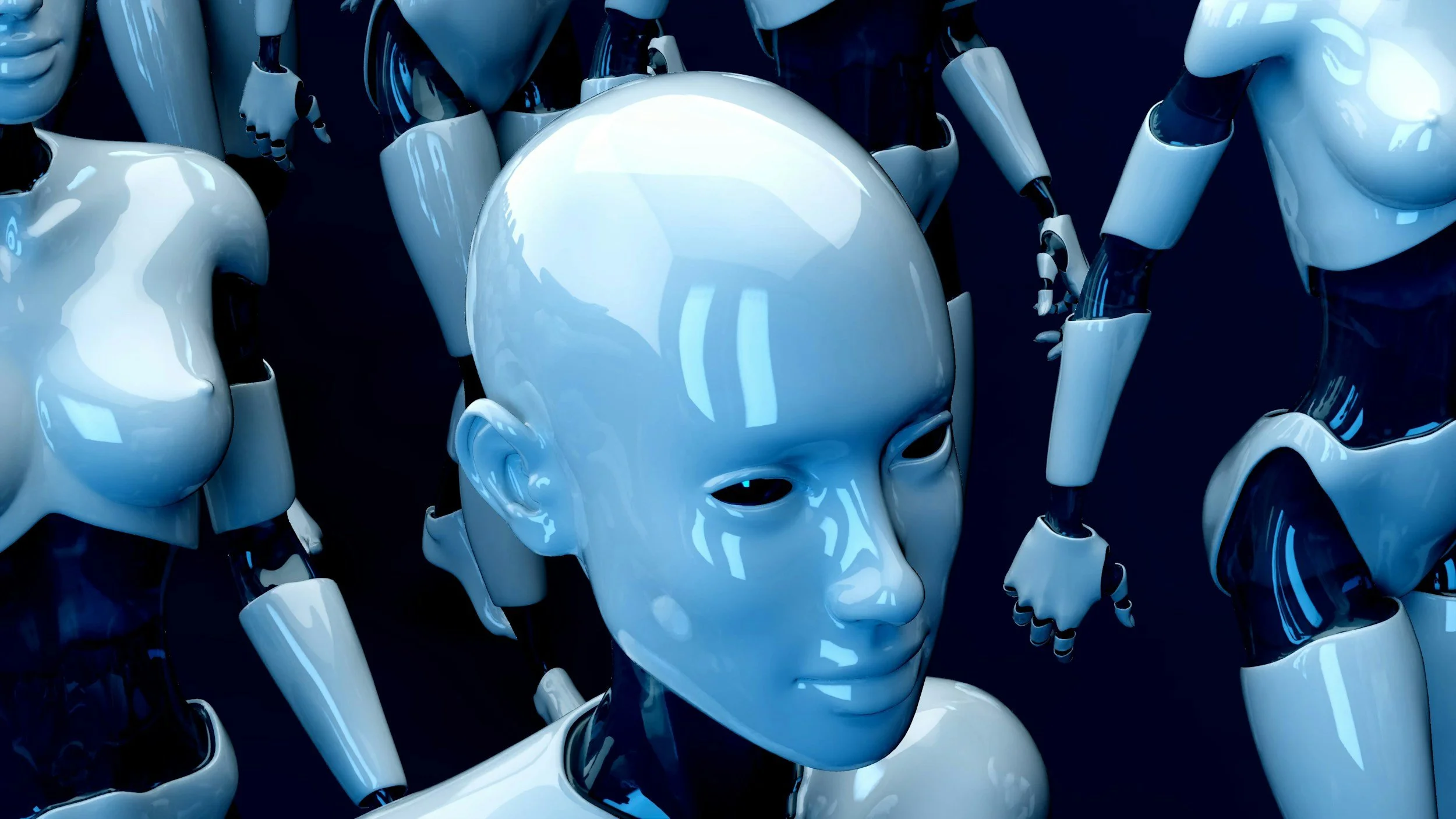
Photo Credit: Julien Tromeur
“There is a lot of work out there to take humans out of the loop in things like medical diagnosis. But if you are taking humans out of the loop, you are in danger of ending up with a very cold form of AI that really has no sense of human interest, human emotions, or human values.”
~ Louis B. Rosenberg
AI is not the only tool created by humans to outsource thinking, but in my mind, it is the one with the greatest danger of creating an unfathomable world, devoid of human interest, emotions, and values. In today’s blog I’m exploring the ethics of AI replacement of human beings and the possible repercussions of these actions. I hope my musings spark you to reconsider outsourcing thinking and reclaiming it. I believe our ability to think, to be discerning, and to make decisions is an intelligence rooted in wisdom far more complex and advanced than anything artificial that humans can manufacture. What do you think, dear reader?
To be clear, I’m not against progress, or in developing effective, time-saving ways to complete complex tasks. I am against taking humans out of the loop. In my opinion, it is an unfortunate aspect of many humans’ propensity towards laziness. People who want to hand off the effort of walking to the television to a remote aren’t going to cause harm (except maybe to their fitness), but people who want to hand off decisions of creativity and decision-making requiring human values are in danger of causing great harm to the future of humankind as we know it.
Louis B. Rosenberg references medical diagnosis as a dangerous arena to employ AI devoid of human interests, emotions, and values. At TEDx Winnipeg, Dr. Rizwan Manji’s talk was about technology and empathy in medicine. He started his presentation with a heartbreaking story from his early days as a doctor, when a missed diagnosis of sepsis in one of his patient’s resulted in the patient’s preventable death. He admitted the reasons for mistakes are complex, but felt the main causes were burn-out and medical error. Manji identified the current medical situation as a crisis and felt AI is the solution. I agree wholeheartedly that our health systems are in crisis, but I contend the reason is a lack in human and economical resources, not in AI diagnostics tools.
As a writer, my concerns about AI aren’t nearly as critical as in medical diagnosis. No one will die from an AI-generated novel. Yet I still feel uncomfortable with our society’s willingness to hand off creative endeavours to artificial intelligence that has no ability to feel. It is our human capacity for emotion that guides us towards empathy, compassion, and discernment. I worry about a future generation raised on novels written by AI that are missing these valuable, integral components of humanity. The same holds true in other creative forms of human endeavour, such as music and art. Is the impact of art found in form, or in the heart and soul embedded in it?
AI used without caution or human input in technical, medical, and other platforms could have devastating results. I have two nieces who have computer science degrees and who work in the fields of programming and writing code. Both have expressed deep concerns over the fast-paced replacement of their skills with AI. Both have found errors in AI-generated documents, as a result of their own editorial due-diligence. But not all humans have my nieces ethics and integrity. Many people are lazy, happy to hand off the responsibility of editing AI to lessen their own workload in an increasingly competitive work environment—but to what consequence?
Our ability to discern truth from fiction has already been severely compromised by news media informed by AI, as well as humans with unethical intentions. People are already inundated with social media misinformation. Young people are the most vulnerable and at risk to predators in disguise, often with the use of AI-generated tools. The willingness to hand off responsibility—to outsource thinking—is, in my opinion, one of the most dangerous choices we can make. The consequences have the potential to be devastating and detrimental, beyond repair, especially if the current trajectory of replacing humans with AI continues to infiltrate every aspect of society.
I know, it’s heavy. But what’s the use in sticking our heads in the sand like camels? Avoiding the truth doesn’t make it disappear. Avoiding making uncomfortable, hard decisions that require effort might make life feel easier in the short-term, but the long-term results are likely to be devastating. And so, dear reader, I end with a final plea. Don’t outsource thinking. Reclaim your ability think and to be a responsible human.
COMING UP…
Books & Projects:
· In December 2025 I signed a contract with Austin Macauley Publishers for my manuscript, The Trials of Alex Anderson, a character-driven novel that explores the relationship between mental illness and trauma. I am now on the road to publication, with an expected release date near the end of 2026. In February I worked with designers on the cover and its near completion. Last week I received the proofread manuscript for my review. Things are happening! I’ll be posting regular updates here on my blog and on social media, so stay tuned for exciting new developments.
· The Rogue Scorpion is available online at Amazon, Chapters-Indigo, and Barnes & Noble. You can also find it at select Chapters-Indigo and El Hombre de la Mancha bookstores.
Reviews & Interviews:
· You can read, listen, or watch a large selection of reviews and interviews on my website.
Events:
· There are no events currently scheduled in my calendar.
YouTube Channel:
· Watch The Rogue Scorpion trailer.